How to Start Playing Poker: A Beginner’s Guide to Mastering the Game
Poker is more than just a card game; it’s a thrilling combination of strategy, skill, and psychology. Whether you’re sitting at a casino table or playing in a friendly home game, poker can offer an exciting experience for players of all levels. But if you’re new to the game, it can seem overwhelming. Fear not! This guide will walk you through the basics, helping you take your first steps toward becoming a confident poker player.
1. Understand the Rules
Before you can start playing poker, it’s crucial to understand the rules. The most popular variant of poker is Texas Hold’em, and it’s the one most beginners start with. Here’s a quick rundown of how it works:
- The Deal: Each player is dealt two private cards (known as hole cards), and five community cards are placed face up on the table.
- The Betting Rounds: Players place bets in four rounds—pre-flop, post-flop, post-turn, and post-river—based on the strength of their hand and their strategy.
- The Showdown: After the final round of betting, players reveal their hands, and the best five-card hand wins the pot. The hand rankings are based on poker’s traditional hierarchy: Royal Flush, Straight Flush, Four of a Kind, Full House, Flush, Straight, Three of a Kind, Two Pair, One Pair, and High Card.
Knowing the order of the hands and what they represent is essential before diving into your first game.
2. Learn the Betting Lingo
Poker has its own unique language, and understanding the key terms will help you communicate with ease at the table. Here are a few common betting terms:
- Fold: When you decide to give up on your hand and not continue playing.
- Call: To match the current bet made by another player.
- Raise: To increase the size of the bet in the current round.
- Check: To pass on your turn to bet without raising the stakes.
- All-in: To bet all your remaining chips in a single round.
Being comfortable with these terms is important for smooth gameplay and for preventing confusion during your first few hands.
3. Start with the Basics: Practice with Friends
While online poker can be exciting, there’s no substitute for the face-to-face experience. If you’re a complete beginner, it’s a great idea to start playing with friends or family members in a casual setting. Here’s why:
- Low Stakes: No money is involved, so you can focus on learning without the pressure of losing real funds.
- Focus on Strategy: Casual games let you practice important skills, such as reading the table, making bets based on your cards, and bluffing.
- Learn the Etiquette: Poker comes with a certain level of social decorum—waiting your turn, not speaking too loudly, and respecting your opponents. Playing with friends helps you get comfortable with these unwritten rules.
4. Get Familiar with Poker Strategy
Poker isn’t just about luck—it’s about making smart decisions based on your cards, the community cards, and your opponents’ behavior. Here are a few fundamental strategies for beginners:
- Start Small: As a beginner, stick to simple plays and don’t risk too many chips early on. Play tight, meaning you fold weak hands and only play strong ones.
- Know When to Fold: Don’t feel compelled to stay in the game just because you’re already invested in the pot. If your hand isn’t strong enough to win, it’s better to fold than to risk more chips.
- Bluff with Caution: Bluffing is one of poker’s most thrilling elements, but it can be dangerous if overused. When starting out, focus more on playing solid hands and less on trying to outwit your opponents.
5. Online Poker: The Perfect Practice Ground
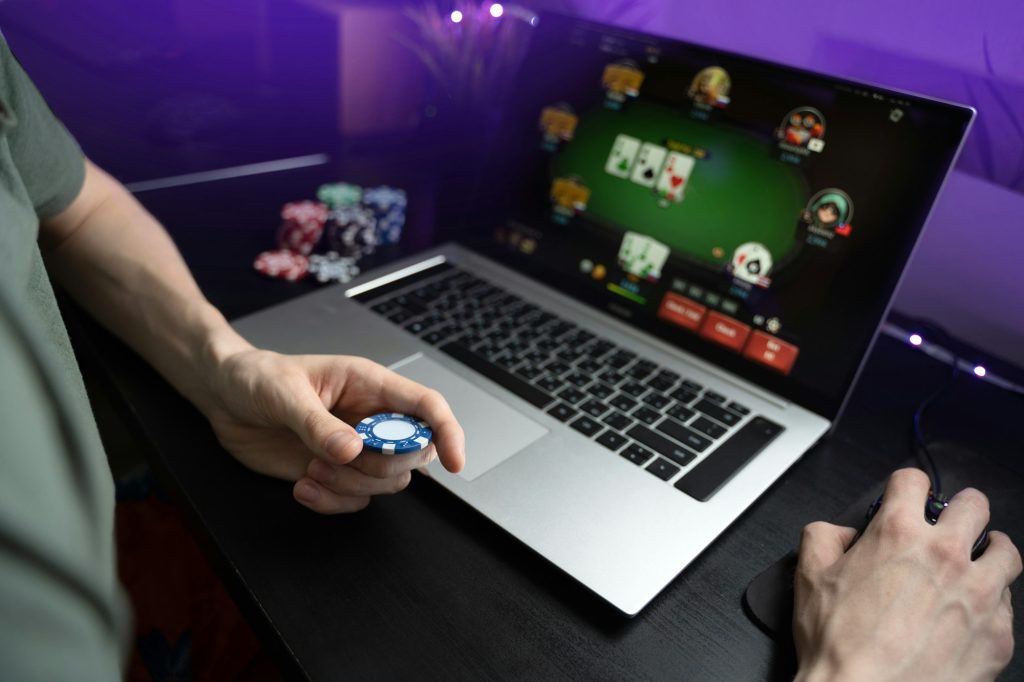
Once you’re comfortable with the rules and have honed your skills in friendly games, it’s time to try your hand at online poker. Most online poker sites offer play-money tables, where you can practice without any risk.
Some benefits of online poker:
- Instant Access: You can play anytime and anywhere, perfect for fitting in a quick session between other activities.
- Low-Stakes Games: Many online platforms offer low-stakes tables where you can enter the game for just a small amount of money.
- Variety: Online poker rooms offer a variety of formats, from Texas Hold’em to Omaha and Seven-Card Stud, allowing you to experiment with different versions of the game.
However, be cautious about jumping into real-money games until you’re confident in your skills.
6. Practice, Patience, and Perseverance
Like any skill, poker requires practice. The best players are those who learn from each hand—whether they win or lose. Keep practicing, stay patient, and observe more experienced players to learn how they approach the game. Over time, you’ll develop your own strategies and start to understand the psychology behind poker.
Final Thoughts
Poker is a game of skill, strategy, and intuition, and learning the ropes can be a rewarding challenge. Start with small stakes, play regularly, and always keep a sharp mind. The more you play, the more you’ll understand the nuances that can make the difference between a good player and a great one. With time, you’ll not only enjoy the thrill of the game but also develop the skills needed to excel. Happy playing!